How Modern Lifestyles Are Affecting Our Connection With Nature ???
Discover how modern lifestyles and digital distractions are affecting our connection with nature and why more people are returning to natural living.
Additya Mehta
6/30/20263 min read
How Modern Lifestyles Are Affecting Our
Connection With Nature ???
When Humans Lived Closer to Nature
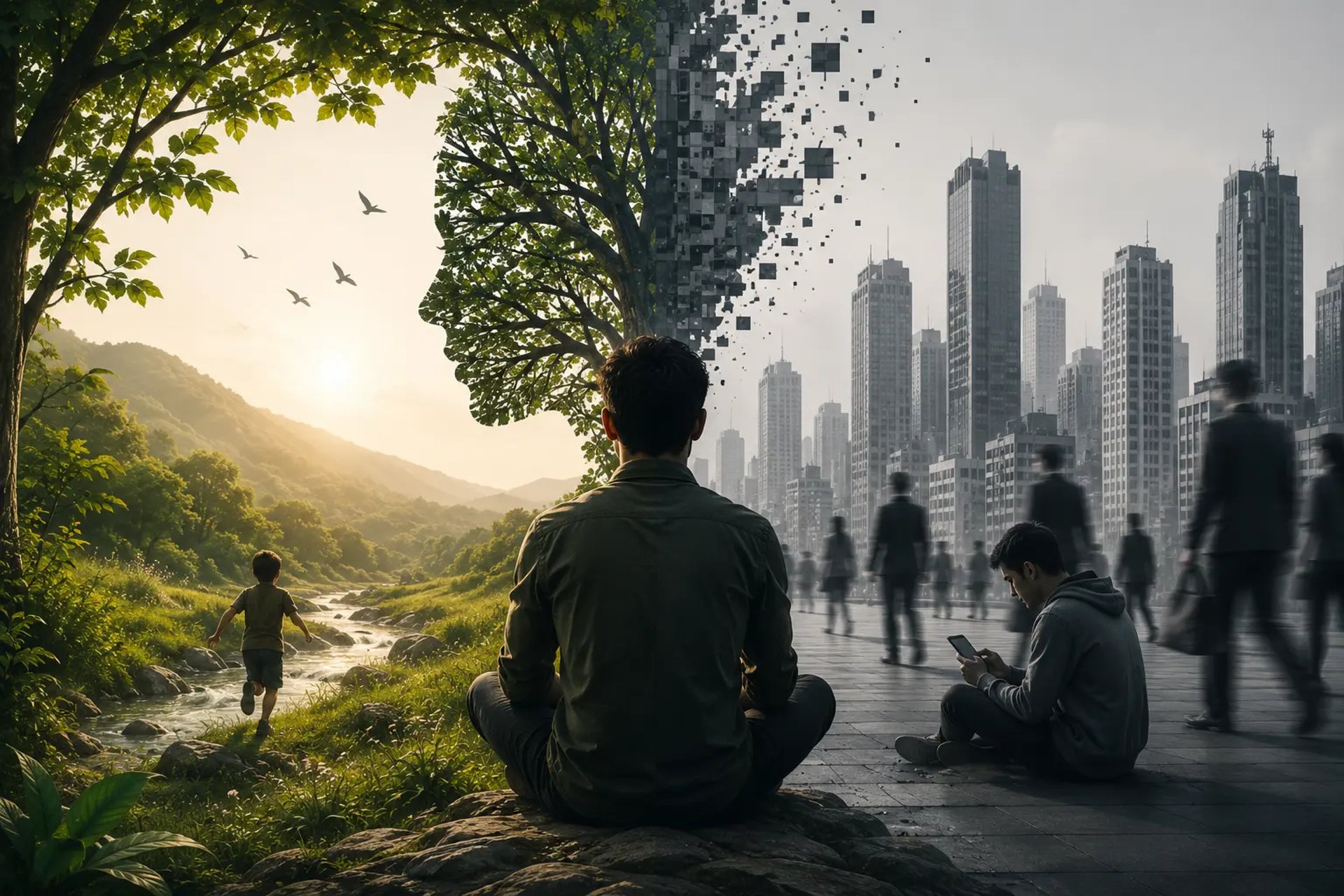
There was a time when human beings were deeply connected with nature.
People worked close to the soil.
Farmers spent their days in fields. Children played outdoors until sunset. Families gathered in open
courtyards during evenings.
Nature wasn't something people planned to visit on weekends.
It was simply a part of everyday life.
People woke up with the sunrise, followed seasonal rhythms, ate locally grown food, and relied on
traditional knowledge passed down through generations...
Life certainly wasn't luxurious by today's standards.
There were no glass office towers.
No luxury apartments.
No food delivery apps.
No air-conditioned metro journeys.
Yet, when we listen to stories from older generations, many describe those years as some of the happiest
periods of their lives.
And that realization is both beautiful and surprising.
Because despite having less, people often seemed more satisfied.
Sometimes, I wonder what life would have been like if we had lived a few generations earlier.
A time when people spent their evenings sitting under the shade of trees, talking with family members,
sharing stories, or simply watching a river flow nearby.
There were no endless notifications.
No crowded metro stations.
No constant rush.
Life moved slowly...
And perhaps because life moved slowly, people had more time—not just for themselves, but for each other
and for nature.
Many of us may never experience that world, yet somehow, it feels familiar.
Maybe because our grandparents lived it.
Or perhaps because, deep down, all of us still long for that sense of simplicity.
So, What Changed ???
How Modern Lifestyles Are Disconnecting Us From Nature ???
Increased Screen Time
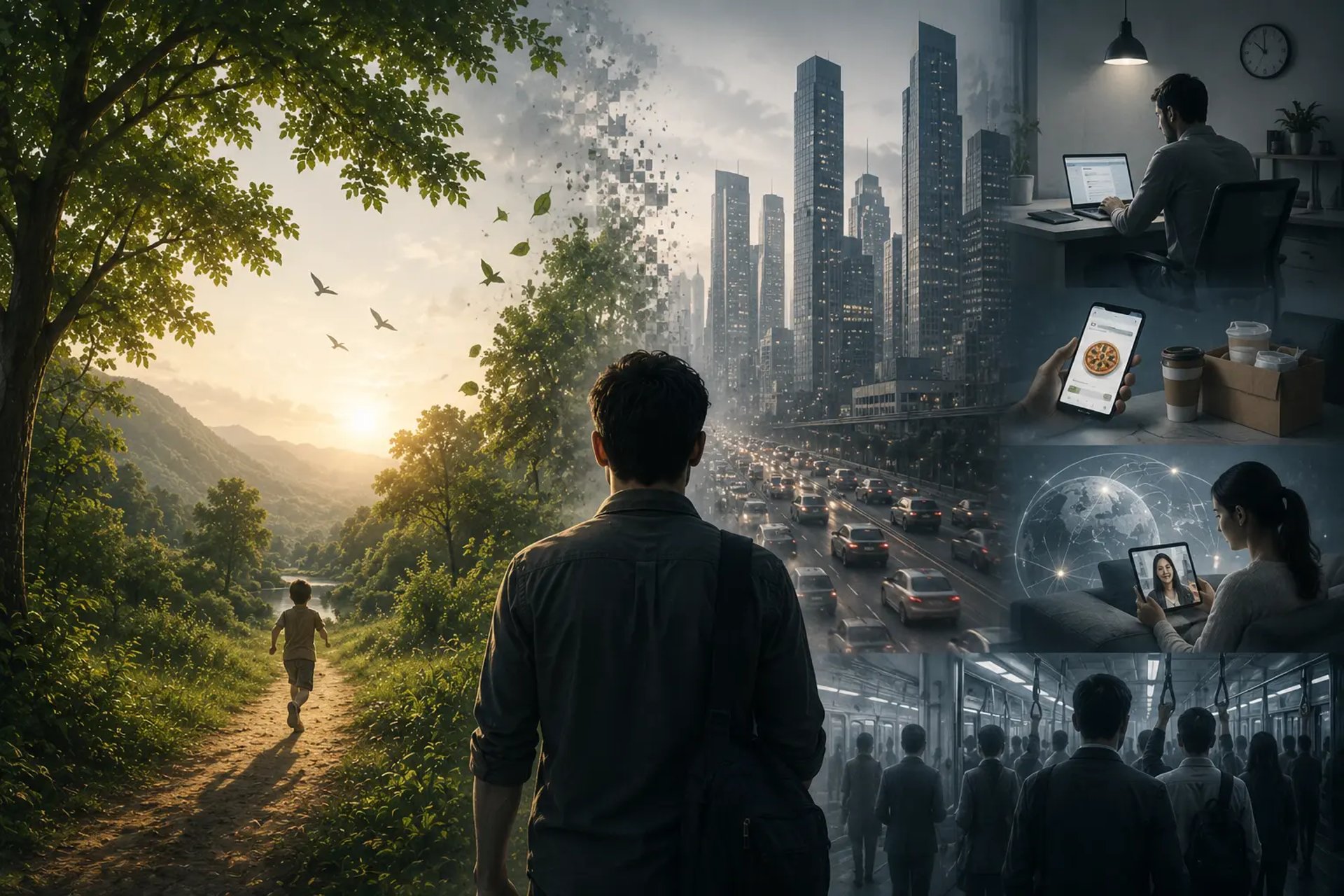
Smartphones, laptops, and social media now occupy a significant part of our day.
While technology keeps us connected digitally, it often disconnects us from the physical world around us.
Urban Living and Concrete Spaces
As cities expand, open spaces are shrinking.
Parks, fields, rivers, and natural landscapes are becoming less accessible for many people, especially those living in urban environments.
Busy and Fast-Paced Routines
Modern lifestyles leave very little room for stillness.
Many people are constantly busy—working, commuting, or managing responsibilities.
As a result, spending time in nature often becomes an afterthought.
Dependence on Convenience
Convenience has become a defining feature of modern life.
From online shopping to instant food delivery, many daily activities require minimal interaction with the natural world.
While convenience saves time, it can also create distance from simple experiences that once brought us joy.
Today's world looks very different.
Cities continue to grow taller,
Technology has transformed the way we live, work, travel, and communicate,
Modern lifestyles have brought incredible convenience into our lives,
Food can be delivered within minutes,
Work can happen from anywhere,
We can speak with someone thousands of kilometers away instantly,
There is no denying that modern life has made many things easier...
But somewhere along the journey, something changed.
Without even realizing it, many of us gradually drifted away from nature.
Today, a large part of our lives is spent indoors.
We move from our homes to offices, from offices to vehicles, and then back home again.
Entire days can pass without touching soil, sitting beneath a tree, or spending meaningful time outdoors.
And perhaps this growing distance is affecting us more than we realize.
What Are We Losing Along the Way ???
Losing our connection with nature isn't just about spending less time outdoors.
It may also mean losing moments of peace, reflection, and balance.
Numerous studies suggest that spending time in nature can help reduce stress, improve mental well-being, support physical health, and encourage mindfulness.
Perhaps this is why so many people today feel overwhelmed, anxious, or constantly exhausted.
As our lives become increasingly digital, our need for nature becomes even more important.
Frequently Asked Questions
How are modern lifestyles affecting our connection with nature?
Modern lifestyles have increased screen time, urban living, and dependence on convenience, reducing the amount of time people spend interacting with nature and outdoor environments.
Why is reconnecting with nature important?
Reconnecting with nature can help reduce stress, improve mental well-being, support healthier habits, and bring balance to fast-paced modern lifestyles.
How can people reconnect with nature in everyday life?
People can reconnect with nature by spending more time outdoors, reducing screen time, growing plants, following traditional wellness practices, and making space for simple natural experiences in daily life.
Why More People Are Returning to Natural Living ???
Across the world, more people are now embracing natural living, traditional wellness practices, gardening, mindful lifestyles, and outdoor experiences.
This growing movement isn't about rejecting technology or modern progress.
It's about finding balance.
People are beginning to understand that convenience alone cannot replace the peace that comes from sitting beneath a tree, walking barefoot on grass, or simply spending time outdoors.
Because human beings were never meant to live completely disconnected from nature.
Reconnecting With Nature Doesn't Have to Be Complicated
Reconnecting with nature doesn't require moving to the mountains or giving up modern life.
Sometimes, small changes are enough :-
Take a walk in a nearby park,
Grow a few plants at home,
Spend less time on screens and more time outdoors,
Follow simple daily rituals inspired by nature,
Slow down occasionally...
Because perhaps the answer isn't to escape modern life.
Perhaps it's to create space for nature within it.
After all, we are not separate from nature.
We are a part of it.
And maybe that's something worth remembering...